Executive summary
Eastern Pacific Shipping (EPS) is one of the world's leading vessel owners, managing a diverse fleet of more than 350 vessels with over 30 million deadweight tonnes in total capacity. A recognised forerunner in sustainability and digital innovation, EPS has deployed various innovative technologies, including high-frequency data collection across its fleet. At this scale and level of ambition, reliable and comparable vessel data is not a supporting function. It is infrastructure.
EPS recognised early that fragmented data streams, multiple onboard data collectors, and inconsistent standards would limit its ability to achieve fleet-wide performance and sustainability goals, serve charterers with trusted information, and scale digital use cases. Rather than addressing these challenges incrementally, EPS made a deliberate architectural decision: to establish a unified vessel data foundation. Working with Raa Labs as its vessel data infrastructure partner, EPS implemented a foundation that standardises data across the fleet, provides continuous monitoring of data health, and delivers harmonised data through structured APIs.
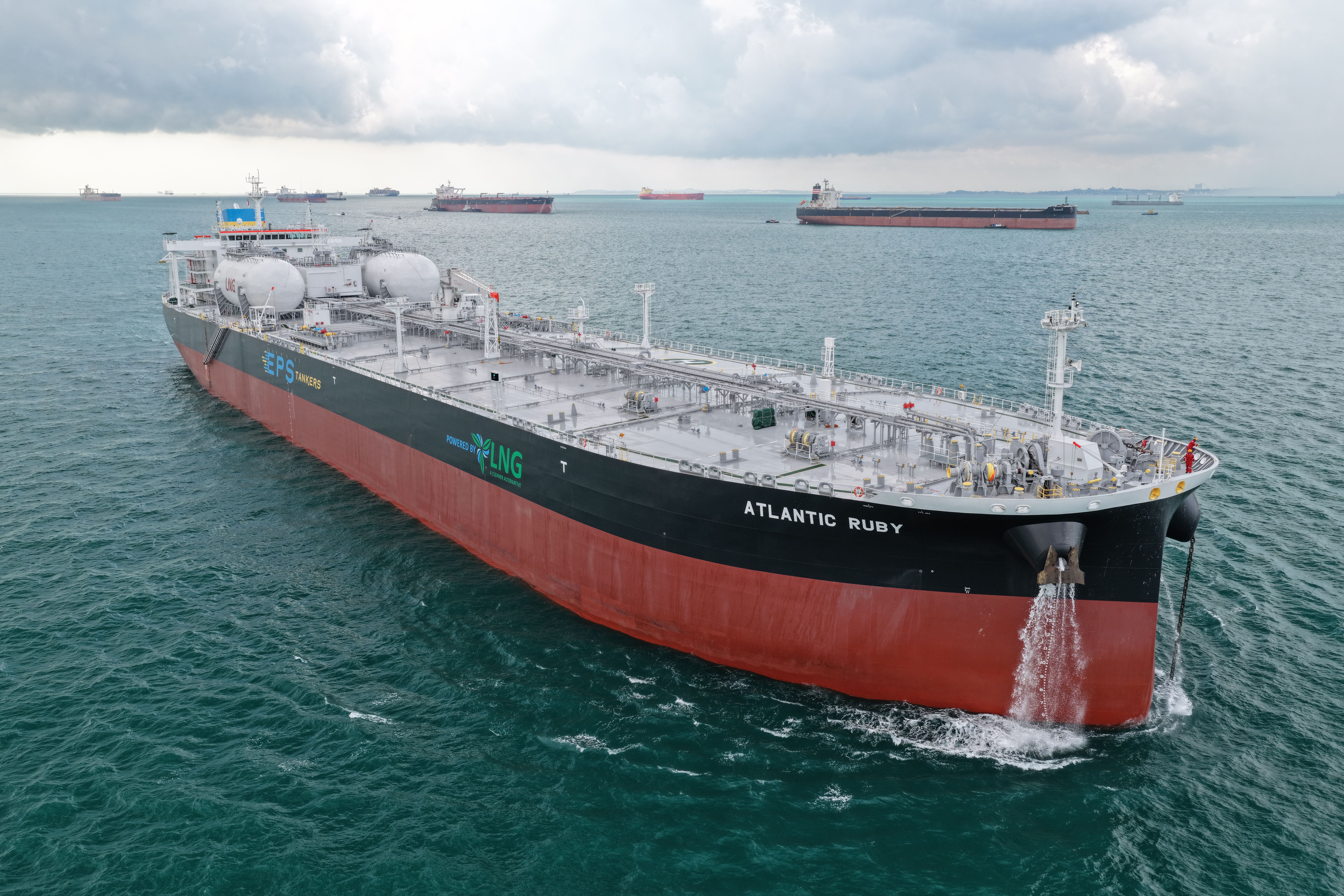
EPS tanker Atlantic Ruby
The result is a scalable, governed infrastructure that allows EPS to treat vessel data as a strategic asset, supporting performance optimisation, sharing reliable data with charterers, and delivering the pace of innovation its fleet demands.
Scaling ambition in a complex environment
The maritime industry faces compounding pressures: tightening environmental regulation and rising expectations for operational improvements. Until recently, most shipping operations relied on offline, vessel-specific systems. It is only in the past decade that vessels have begun sending high-frequency data from ship to shore, and the industry overall remains in the early stages of managing this data reliably at scale.
Eastern Pacific Shipping has not waited for the industry to mature. The company has invested in technologies and operational practices that position it at the frontier of maritime innovation. High-quality telemetry sits at the centre of these initiatives. For EPS, vessel data is the critical enabler of operational excellence, delivering a quality service to charterers, and long-term competitiveness.
The challenge: from data-rich to data-ready
EPS had already invested significantly in vessel data collection. Multiple onboard data collectors were installed across the fleet, capturing data from quality sensors. Several systems delivered data to different clouds. By any conventional measure, EPS was data-rich.
But having data is not the same as being able to turn it into value. As the fleet expanded and technology initiatives accelerated, structural challenges became clear.
Data fragmentation
Vessel data resided across multiple collectors and OEM clouds, each with its own data structures, naming conventions, and units of measure. Even when similar signals were available across vessels, they were not directly comparable. Furthermore, every cloud meant a separate path for data retrieval, making it very hard to work efficiently with the fleet at large. Multiple data collectors meant relying on various APIs not designed for the retrieval speeds and data volumes required, often taking hours to return data. This severely limited the ability to process and provide actionable insights from the data.
Inconsistent standardisation
Different methodologies for handling different types of telemetry across different providers further increased the complexity of working with a large fleet. The same operational tag, whether fuel consumption, shaft power or draught, could arrive with different tag names, scaling factors, or units depending on the vessel and data collector. Fleet-wide analysis required repeated manual data engineering and reconciliation.
Operational blind spots
When data streams were interrupted, degraded, or partially missing, there was no easy and systematic way to detect it. Issues could remain hidden until downstream analytics or performance reports exposed inconsistencies. Staying at the forefront and having recognised the problem early, EPS has a dedicated telemetry team actively working on handling data issues across the fleet. But the work of consistently prioritising and finding the issues to correct was both tedious and challenging.
Duplication of effort
Every internal team and external partner working with EPS data faced the same challenges independently, cleaning, reconciling, and validating before any analysis could begin. For a fleet of EPS's scale and expansion, this was a structural constraint. Fleet size should be a strategic advantage. Instead, without harmonisation, it amplified complexity.
The strategic decision: a vessel data foundation
Rather than addressing these challenges through individual integration projects or point-by-point fixes, EPS chose a structural approach. Together with Raa Labs, EPS established a unified vessel data foundation designed to sit between different onboard data collectors and all downstream applications, creating a single governed cloud layer where data is standardised, continuously monitored, and made accessible across the fleet.
This was not a technology procurement decision. It was an architectural decision about how vessel data should be managed as a long-term capability. With harmonised, high-frequency data now readily available across the fleet, EPS can quantify the effect of new and existing technologies where it was once not possible.
Fleet-wide standardisation
Data from multiple onboard collectors and cloud sources is ingested into the Raa Labs foundation and harmonised into a common structure. Tag naming conventions, units of measure, and scaling are standardised. The same signal means the same thing regardless of which vessel it originates from or what data collector captured it, enabling EPS to conduct fleet-wide performance comparisons on a genuine like-for-like basis. This enabled EPS to benefit from their scale.
Operational monitoring and data quality
A defining requirement for EPS was operational visibility into the health of its data. The foundation is operated as a managed infrastructure layer, enabling systematic comparison between expected and actual data tags per vessel, surfacing missing signals and connectivity interruptions. Continuous data quality models detect anomalies or implausible readings.
In practice, this means that EPS's telemetry team has a clear, real-time view of which vessels are connected, which signals are streaming, and where issues exist. Rather than manually checking individual data sources or waiting for downstream failures to reveal problems, the team can see the status of the entire fleet in one place and efficiently pinpoint exactly where a data stream has degraded, a signal has dropped, or a sensor has stopped sending data. This operational visibility transforms how data health is managed, making the process structured and easier to prioritise follow-up.
EPS has a dedicated telemetry team responsible for data-related issues across the fleet, coordinating between OEMs, vessel managers, and crew. With these monitoring capabilities at their disposal, the team can prioritise effectively, act on real issues quickly, and maintain an overview of the complete fleet at all times. Data becomes actively managed infrastructure, not a passive byproduct of onboard systems.
Structured access and controlled sharing
The foundation exposes harmonised data through advanced APIs developed by Raa Labs. Data retrieval that previously took hours or was near impossible is now possible programmatically in seconds, unlocking efficient, on-the-fly analytics both internally and externally. This allows for seamless handling of large data volumes to feed data-hungry machine learning algorithms and truly understand the current state of the fleet.
Defined subsets of data can also be shared efficiently with charterers, third parties, and technology partners without requiring custom integration projects each time. Data ownership and control remain firmly with EPS.
"Having a solid vessel data foundation is fundamental to our digital strategy. It allows us to compare apples to apples across our entire fleet and ensures we can serve our charterers with higher quality and transparent performance data. The collaboration with Raa Labs has been essential in making this a reality at the scale we operate."
Pavlos Karagiannidis, Manager Fleet Optimisation, Eastern Pacific Shipping
Conversational access through a vessel data MCP
For EPS, the value of a trusted data foundation is measured by how easily the organisation can put it to work. Building on the API layer, EPS has become an early adopter of a Model Context Protocol (MCP) server developed by Raa Labs. An MCP is an open standard that allows AI assistants to connect securely to an external data source and work with it directly. For EPS, it turns the vessel data foundation into something anyone in the organisation can query in plain language, retrieving harmonised, quality-checked data and getting back answers, tables, and visualisations.
This changes who can work with fleet data at EPS. Rather than writing API queries or routing requests through a data engineer, an EPS user can simply ask questions such as "which vessels reported fuel consumption above a given threshold last month", "how shaft power compared across sister vessels on a particular voyage", or "where data streams dropped overnight". The request is translated, the foundation's APIs are called, and the relevant data comes back, drawing on the same standardisation and data quality that govern the rest of the platform. EPS's access controls and data ownership remain unchanged; the MCP is a new way in, not a new copy of the data.
"EPS has been an early adopter of AI, and it has been a pleasure to partner with them in putting it to work on their fleet data."
Ari Marjamaa, CEO, Raa Labs
By being one of the first operators to put the MCP into practice, EPS extends fleet insight well beyond its technical analytics team, accelerating day-to-day exploration and decision-making across the business. Early adoption also lets EPS shape how the capability develops, ensuring it reflects the questions and workflows that matter most to its operation. As AI assistants become standard tools across the company, EPS will already have a trusted, governed channel connecting them directly to reliable fleet data.
"The value of our data foundation really is becoming apparent with the MCP. Because the underlying data is structured and trustworthy, asking questions of the fleet became genuinely effortless, and the quality of the answers reflects the quality of the foundation beneath them."
Mike Wilson, Assistant Manager, Fleet Optimisation, Eastern Pacific Shipping
The value of partnership
Establishing a fleet-wide vessel data foundation is not a technology deployment alone. High-frequency vessel data is inherently complex and vessel-specific. Progress requires sustained, structured collaboration across OEMs, data collector vendors, crew, vessel managers, and internal analytics teams. EPS and Raa Labs have worked in close and sustained collaboration to build and refine the foundation, iterating, learning, and solving the many variables that determine whether fleet-scale data can be trusted.
Raa Labs brings deep expertise in vessel data infrastructure and the technical systems and operational processes required to capture, standardise, and deliver vessel data reliably at scale. Combined with EPS's sophisticated understanding of what its fleet data must deliver and how to efficiently address the data health issues that occur, the result is a foundation that is both technically robust and operationally practical.
"Fleet-scale data reliability is not something you solve once. What made this work was EPS's willingness to treat it as an ongoing operational discipline, not a one-off project. Our role is to provide the infrastructure and the operational visibility, but the reason it works so well is that EPS has the internal capability to act on issues impacting their data."
Ari Marjamaa, CEO, Raa Labs
What the vessel data foundation enables for EPS
- Standardised, comparable data across vessels regardless of onboard data collector or OEM system
- Continuous monitoring of data streams with visibility into expected versus actual tags per vessel
- Data quality models running continuously to detect anomalies, drift, and signal degradation
- High-performance API access enabling data retrieval in seconds for internal analytics and controlled third-party sharing
- Conversational access via an MCP, letting AI assistants query the fleet's harmonised data in plain language while preserving the platform's governance and access controls
- A governed data layer independent of any single analytics vendor, preserving EPS's freedom to evolve use cases over time
Conclusion
By establishing a unified vessel data foundation in collaboration with Raa Labs, EPS has created scalable infrastructure that supports its ambitions in performance, sustainability, service to charterers, and innovation. Vessel data across the fleet is standardised, monitored, and accessible, not as a collection of fragmented streams, but as a governed, reliable asset.
As the maritime industry continues to evolve, with new regulations and ever-increasing expectations for efficiency, this architectural discipline ensures that EPS can move faster and leverage vessel data at scale.
Vessel data is no longer fragmented telemetry. For EPS, it is strategic infrastructure.
About Eastern Pacific Shipping
Eastern Pacific Shipping (EPS) is one of the world's largest ship owners, operating a diversified fleet of more than 350 vessels with over 36 million deadweight tonnes under management. With an orderbook of more than 100 vessels, EPS is positioned for continued growth. The company is a recognised leader in sustainability and innovation, with investments spanning alternative fuels, carbon capture, wind-assisted propulsion, and advanced data-driven performance management. EPS is headquartered in Singapore.
About Raa Labs
Raa Labs provides vessel data infrastructure for the maritime industry, the independent data layer beneath applications that captures, standardises, and delivers vessel operational data reliably at fleet scale. Working with leading global fleet operators, Raa Labs enables fleets to trust their data in everyday processes and decisions. Raa Labs is based in Norway and is part of the Wilhelmsen Group.