
The executive view
This white paper is created for executives, vessel owners, operators, and maritime industry professionals who are navigating the challenges and opportunities of digital transformation in maritime operations. It offers an in-depth exploration of how digitalization can significantly enhance operational efficiency, drive sustainability efforts, and foster innovation in the maritime sector. Readers will gain insights into the critical role of top management in steering digital initiatives, the importance of a comprehensive vessel data strategy, and the nuances of technological layers essential for digital transformation. By reading this guide, stakeholders will be equipped with the knowledge to make informed decisions, leverage best-of-breed digital solutions, and implement a robust digital foundation that positions their operations for success with digitalization initiatives in a rapidly evolving industry landscape.
Executive summary
- Digital transformation as a strategic imperative: The maritime industry is at a crucial point where embracing digitalization is not just an option but a necessity to meet environmental regulations and enhance operational efficiency. The drive towards achieving IMO 2030 and 2050 goals underscores the need for a sustainable and efficient future through digital means.
- Leadership and visionary guidance: The success of maritime digitalization heavily relies on top management's commitment and the strategic vision they set forth. Leadership's role is crucial in crafting and implementing a vision that integrates digitalization into the core of maritime operations, ensuring alignment and support across the organization.
- The role of a vessel data strategy and the transformation team: Developing a successful vessel data strategy is central to digital transformation, enabling vessel operations to become more efficient and environmentally friendly. This strategy must be supported by top management and executed by a dedicated transformation team to ensure its effectiveness and alignment with the company's digital vision.
- Navigating technological layers for digitalization: Understanding and effectively managing the various technological layers involved in maritime operations, from sensors and OT data capture to cloud infrastructure and the application layer, is essential for digital success.
- Building a resilient digital foundation: Establishing a robust digital foundation is vital for the long-term success of digitalization efforts. A well-architected digital foundation allows vessel owners and operators to leverage the full spectrum of digital technologies.
Introduction to maritime digitalization
The maritime industry stands at a pivotal juncture, driven by the dual forces of technological advancement and pressing environmental regulations. As global trade continues to expand, the need for more efficient, sustainable, and resilient maritime operations has never been more acute. The digitalization of maritime operations represents a significant leap forward in addressing these challenges, offering unprecedented opportunities for optimization, innovation, and environmental stewardship.
The journey towards digital transformation in the maritime sector is not merely a technological upgrade but a strategic realignment towards a more sustainable and efficient future. The International Maritime Organization's (IMO) ambitious goals for 2030 and 2050, aimed at significantly reducing greenhouse gas emissions, have placed a spotlight on the industry's environmental impact and its potential for rapid transformation. Digitalization emerges as a crucial lever in this transformation, enabling the industry to meet regulatory demands while enhancing operational efficiency.

A key driver of maritime digitalization is the industry-wide push towards decarbonization. With the IMO's regulations setting a clear trajectory towards reduced emissions, maritime operators are increasingly turning to digital solutions to optimize fuel consumption, enhance route planning, and monitor environmental impact. The advent of the Carbon Intensity Indicator (CII) regulations further underscores the importance of data in achieving these goals. The maxim "the cheapest fuel is the one you do not need to burn" encapsulates the essence of digitalization's role in maritime sustainability: optimizing performance to reduce unnecessary fuel consumption.
Digital technologies, including the Internet of Things (IoT), big data analytics, and AI, are transforming vessel operations, enabling real-time monitoring, predictive maintenance, and automated decision-making. These technologies not only contribute to reducing emissions but also significantly enhance safety, reliability, and cost-efficiency.
The role of top management in digital transformation and crafting a vision
The journey of maritime digitalization starts with a strategic vision from the top. Top management's foresight and commitment chart the path towards a future where digitalization is not just about enhancing operational efficiency but also about achieving broader sustainability goals and adhering to evolving requirements like the IMO 2030 and 2050 frameworks. The role of leadership transcends simple endorsement; it involves the active crafting of a vision that integrates digitalization into the fabric of the company's maritime operations. Without a clear mandate and recognition from top management, any real digitalization effort is likely to falter.
Leadership commitment and vision crafting
- Strategic organizational alignment: Successful digital transformation is contingent upon clear organizational alignment and mandate. Top management must ensure that digitalization initiatives are adequately funded and that there is a unified organizational structure ready to support, embrace, and implement the transformation following these efforts. The creation of a dedicated transformation team becomes essential to oversee and enact the required changes.
- Crafting a vision for digitalization: Far from being a mere formality, establishing a clear and compelling direction for the company's digitalization journey is critical. This vision, originating from top management, serves a critical purpose, guiding the entire organization towards a unified digital future.
The organizational element: building a transformation team
Central to realizing the vision of maritime digitalization is the formation of a dedicated transformation team. This singular entity is tasked with translating strategic directives into actionable projects and initiatives that align with the company's digitalization goals. While some components are technology-driven in nature, it is easy to overlook the transformational aspects of a digitalization journey. The execution signifies a fundamental shift in how the company operates, driven by the transformation team under the guidance of top management's vision.
Empowering the transformation team
- Role and responsibilities: Tasked with the mission to realize the digital vision, the transformation team dives into both technological and strategic topics, ensuring that digital infrastructure layers are comprehensively understood and designing the overall architecture. Their role is pivotal in navigating the intricacies of digital transformation within the maritime domain of their own company.
- Research, knowledge, and execution: It is imperative that the team learns and gets a comprehensive understanding of digital technologies, data management practices, and the integration of IoT solutions within maritime operations. They need to learn about the different technology layers and assess how to best puzzle different pieces together to deliver on the mandate and digital vision.
- Internal transformation: With an intimate understanding of the company's operations, the team is uniquely positioned to ensure that technology implementations foster real adoption and operational improvement as the overall initiative is being executed.
Crafting a successful vessel data strategy
In the journey towards maritime digitalization, a pivotal element is the creation of a successful vessel data strategy. This strategy is the keystone for transforming vessel operations to drive efficiencies and significantly reduce environmental impact. Grounded in the overarching digital vision, the strategy is tailored by the transformation team to lay a strong foundation right from the start, ensuring long-term scalability and adaptability to future needs and technological advancements across different technological layers.
The engagement and commitment of top management are indispensable. As the transformation team dives deeper into the digitalization landscape, understanding how each technological piece fits into the larger puzzle, the unequivocal support from leadership becomes paramount.
Understanding the different layers required for vessel digitalization
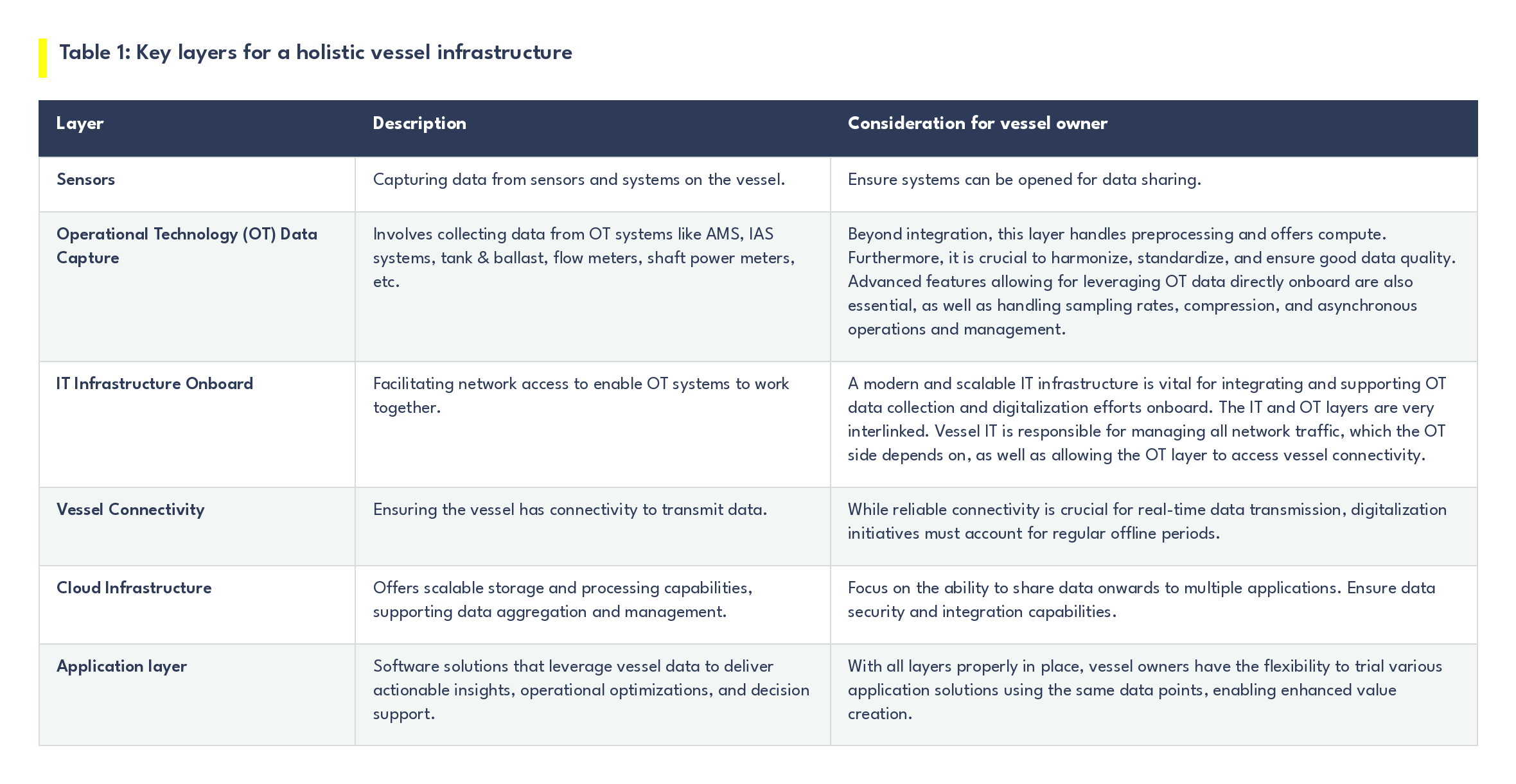
The digital transformation of maritime operations requires a nuanced understanding of the various technological layers involved. For vessel owners, navigating these layers effectively means leveraging best-of-breed solutions at each level, both to optimize results and to retain flexibility for the future. This approach recognizes that no single provider can excel in every aspect of digitalization, underscoring the importance of strategic selection and integration of various technologies from different key partners.
Click image to enlarge
For vessel owners, understanding and addressing each of these layers individually, while ensuring they work together cohesively, is crucial for achieving a successful digital infrastructure. The ability to select the best solutions for each layer, from sensors to applications, enables vessel owners to build a digital foundation that enhances operational efficiency and drives innovation.
A robust digital foundation is critical for the successful implementation of digitalization initiatives.
Conclusion: charting the course for maritime digitalization
The journey toward maritime digitalization marks a pivotal era of transformation, offering both significant challenges and unparalleled opportunities. This evolution demands not just technological adoption but a holistic strategic approach, deeply rooted in visionary leadership, a clear and compelling vision, and meticulous planning. As the maritime industry steers through this transformative course, the embrace of digital technologies is set to redefine operational excellence, environmental stewardship, and the very metrics of success within the sector. The future beckons to those ready to lead with innovation, foster collaboration, and invest in the digital capabilities that will sculpt the maritime landscape for generations ahead.
In the quest for operational efficiency, sustainability, and competitive edge, maritime digitalization emerges as a strategic imperative. The industry's commitment to achieving net-zero emissions underscores the critical role of digitalization in realizing these ambitious sustainability targets. By enhancing operational efficiencies, reducing fuel consumption, and minimizing emissions, digital technologies are pivotal in steering the maritime industry towards a more sustainable and compliant future.
The successful integration of digital technologies into maritime operations hinges on forward-thinking leadership. Executives are tasked with championing digital initiatives, aligning them with strategic objectives, and cultivating a culture primed for change and innovation, while focusing on the holistic big picture. Investment in a proper digital infrastructure lays the foundation for future resilience and growth.
About Raa Labs
Raa Labs provides vessel data infrastructure for the maritime industry, the independent data layer beneath applications that captures, standardises, and delivers vessel operational data reliably at fleet scale. Working with leading global fleet operators, Raa Labs enables fleets to trust their data in everyday processes and decisions. Raa Labs is based in Norway and is part of the Wilhelmsen Group.